


Pilot by ear
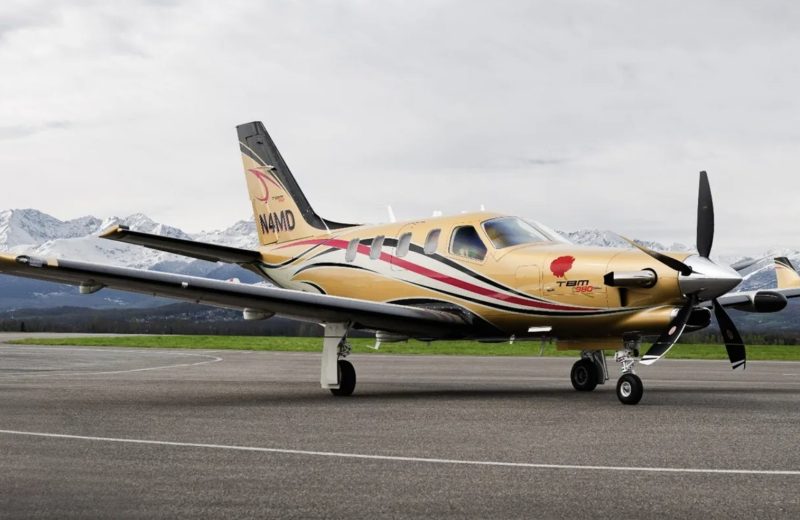
This TBM 980 is Dr Ian Fries' sixth Daher TBM aircraft. Each has been delivered via a transatlantic ferry crossing from Daher's headquarters in Tarbes, France.
Back in the 1970s, United Airlines would recruit flight crews from college music programmes.
The carrier favoured students who held these degrees because they demonstrated factors such as vocal clarity and experience of performing in public.
Last year, CAE forecast business aviation will need to find at least 33,000 new pilots by 2034. That’s arguably an optimistic outlook given CAE’s equation relies on 32,000 of 59,000 active business aviation pilots today remaining in the cockpit. Ask Boeing and it believes aviation as a whole will require 660,000 pilots by 2044, including 119,000 in North America alone.
CAE believes meeting the demand will require “bold thinking and innovative approaches”.
The Flying Musicians Association (FMA) believes musicians can help to make up the numbers. There are as many as 400,000 music degree holders in the US, while a little over 10,000 music students graduate each year.
“FMA was formed in 2009 after learning of the empirical data and stories from fellow pilots who are also musicians,” John Zapp, president and CEO of FMA tells Aircraft Investor. “It amazed me that Delta Airlines would recruit college music students and that the US Air Force believed flight students with a music background performed better than their counterparts who had engineering degrees.”
Zapp says the skill sets of pilots and musicians are very similar. “Precision, practice skills, hand-eye coordination, listening skills, working with others,” he explains. “Musicians take a complex piece of music, break it down to smaller passages [or] tasks like preparing for a flight, they practice to perfection, like how early learning pays off when staying proficient and completing a flight, then they piece it all together for the performance or the flight mission.”
Notable musician pilots include Bruce Dickinson, lead vocalist of Iron Maiden and qualified airline pilot, who captained the band’s Boeing 757 during their world tours, John Denver, Alan Jackson, Aaron Tippin and Dierks Bentley.
The association runs the FMA Solo programme which seeks nominations from music directors of high school music students who show a passion for flight. The programme connects each successful applicant with a mentor to help navigate flight training and make connections in the aviation community.
“All nominees compete for the opportunity to learn to fly through a scholarship which provides the student financial support through flight training up to their first solo,” says Zapp. 19 students have received the scholarship to date, while the association has helped “countless” others, he adds.
FMA has more than 1,000 members globally, flying everything from general and corporate aviation to commercial and military. It is supported by companies including Hartzell Propeller, Banterra Aircraft Financing and audio technology giant Bose.
“I think musicians make great pilots,” Mitch Loiselle, aviation relationship manager (and part-time guitar enthusiast) at Banterra Aircraft Financing tells us. “We support FMA by offering aircraft finance opportunities to members, and others who find us through their website. When we finance aircraft for an applicant who came to us through FMA, we are able to make a donation that helps support their scholarships.”
Dr Ian Fries, an orthopaedic surgeon and FAA-qualified senior Human Intervention Motivation Study (HIMS) aviation medical examiner is one of five advisory board members at FMA. Having owned six TBMs, the most recent of which is a TBM 980 delivered in April, Fries is known to carry at least one accordion on his aircraft.
“I am probably eligible for a Guinness World Record for the longest flight in a single-engine aircraft with four accordions aboard,” he tells us.
Fries says the potential for musicians to qualify as pilots is well-established.
“There was a study done several years ago at the Air Force Academy. They wanted to figure out whether out of the people that came as students, could they predict those that would ultimately be pilots,” he explains. “They found that if a student was a musician there was a much higher chance that they would become a pilot.”
“Both musicians and pilots must be able to convert sheet music or checklist into physical motion,” he added.
CAE’s forecast offers 10 points the aviation industry can action to meet pilot demand. The FMA is already implementing five, including rigorous selection programmes, highlighting the benefits of piloting early in a student’s education and partnering with training organisations.
But with only a handful of scholarship places available each year, it can only do so much. The industry needs to chime in.
“Aviation, as a whole, needs to ramp up to introduce young people to our industry,” says Loiselle. “We not only need young people to become interested but should look at recruiting people from other industries who could easily transition to support aviation.”
As Iron Maiden’s Dickinson puts it: being a pilot was “way more rock and roll” than his music career.
Subscribe to our free newsletter
For more opinions from Aicraft Investor, subscribe to our One Minute Week newsletter.