


The juice from the squeeze – Panorama acquires 22 Caravans
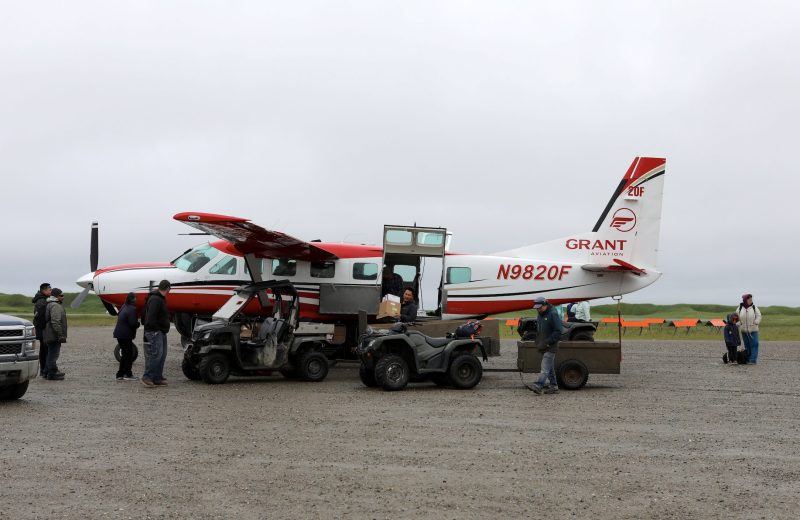
The Cessna 208 Caravan prototype first flew in December 1982, and received its certification from the FAA in October 1984.
Why touch the $3m turboprop over the $80m Gulfstream when both create equal piles of paperwork?
It is a persistent question facing aircraft financiers: whether the fixed operational burden – legal, structuring and compliance – justifies capital deployment on smaller fleet transactions. Most conclude the juice isn’t worth the squeeze.
Not all though. Panorama Aero wants to become the largest operating lessor in the special missions turboprop market. The business just acquired a lease book of 22 Cessna Caravans from Avion Capital Corporation. The new aircraft – two Cessna Model 208s and 20 Model 208Bs – join an existing fleet comprising King Air 350ERs and Pilatus PC-12 variants.
CEO Pari Parchi, who began her career on Wall Street including stints at Morgan Stanley and Fortress Investment Group, founded Panorama through a management buyout of Cowen Aviation Finance, where she was CEO, in 2018. Since then Parchi has been “building quietly” with a focus on “mission-critical aviation”.
Panorama provides creative capital to smaller regional airlines, governments and other parties where smaller, more specialised aircraft are required. Panorama also offers other support services including parts support, integration and logistics.
What sets Panorama apart, Parchi argues, is the nature of the capital itself. “We are a creative capital platform,” she tells us. “We can buy aircraft, parts, operating businesses, infrastructure – whatever the sector needs. And unlike private equity, we are not here to buy and flip. Our capital is long-term committed capital. We build to hold.”
The Caravans are on lease to Alaska-based Grant Aviation, operating between Kenai, the Yukon-Kuskokwim Delta, Bristol Bay and the Aleutian Islands, linking otherwise isolated communities.
Parchi says this is the first of numerous similar deals. “Our strategy is to provide efficiencies that are missing from this highly fragmented market,” she adds.
“Larger leasing companies have avoided this space for two reasons. The first, as I mentioned, is deal size. The second, is an unwillingness to accept aircraft modifications that they view as too risky to asset value. Our expertise in this space gives us the insight to work with operators from traditional airlines to defence contractors involved in ISR [intelligence, surveillance and reconnaissance].”
Panorama started with a portfolio of specialised mission turboprops. “That continues to be our bread and butter, but we are asset agnostic and continue to selectively broaden our scope,” says Parchi. “I think we ultimately want to position ourselves to be the largest operating lessor of the special mission sector.”
Parchi views turboprops, particularly Caravans, as the perfect platform to bridge to future technology. She is not alone there – for example, Long Beach-based hybrid-electric propulsion developer Ampaire and autonomous flight startups Merlin Labs and Reliable Robotics all use them as testbeds.
“Think about advanced air mobility [AAM]. There’s a sexiness to the industry that gets investors to come in without really understanding the inherent challenges,” says Parchi. “I think we need to be cognisant that you’ve got to be careful as to where you put capital to work. Where you’re not going to lose your shirt because you’ve decided to back the Uber of private aviation or whatever it is.
“Why do we need brand new? Existing platforms work pretty damn well. The Caravan is a perfect example, a workhorse asset operating four decades after it was first produced.”
Parchi is positioning the company to be ready for when AAM is ready. “From a capital, maintenance and parts supply perspective, we want to provide all the infrastructure in the backbone for that developing sector, because it is effectively a continuation of this market,” she says.
For now, the plan is to continue to acquire not only turboprop aircraft but other assets that have multi-use capabilities. Parchi says the business is seeing demand from government customers for turboprop assets once they are upgraded into a “next-gen” platform.
“The idea is to buy these assets, position ourselves for upgrade and then continue to have them on lease with existing operators or new operators,”she explains.
Parchi is confident new operators will come knocking. “A lot have been using debt, but now the cost of capital on a traditional aircraft doesn’t make sense,” she says. “We act as a hybrid because we’re effectively equity capital. We’re not reliant on debt funding to get deals done.”
Part of the reason Parchi kept quiet during the early years at Panorama was a desire to not raise unnecessary capital and grow into areas she’d rather avoid, particularly if it meant relinquishing control.
Sitting at the heart of Parchi’s vision for the future of turboprops, maintenance is an area earmarked for evolution. Panorama frequently works as a subcontractor for the federal government, providing large primes with aircraft and parts, often leasing directly to states.
“We tend to work with government operators that have their own maintenance facility, but we are in the process of potentially looking at acquiring a maintenance capability,” she says. “We think that could enhance our existing fleet and also bring in new business.”
The juice might not be worth the squeeze for some, but maybe that is about knowing where or from what angle to look. There are dozens of lemon varieties. Meyer lemons are reportedly the juiciest. Parchi is confident she’ll make lemonade.
Subscribe to our free newsletter
For more opinions from Aicraft Investor, subscribe to our One Minute Week newsletter.