


‘Sweat the details’ to make turboprop services work, says Tradewind CEO
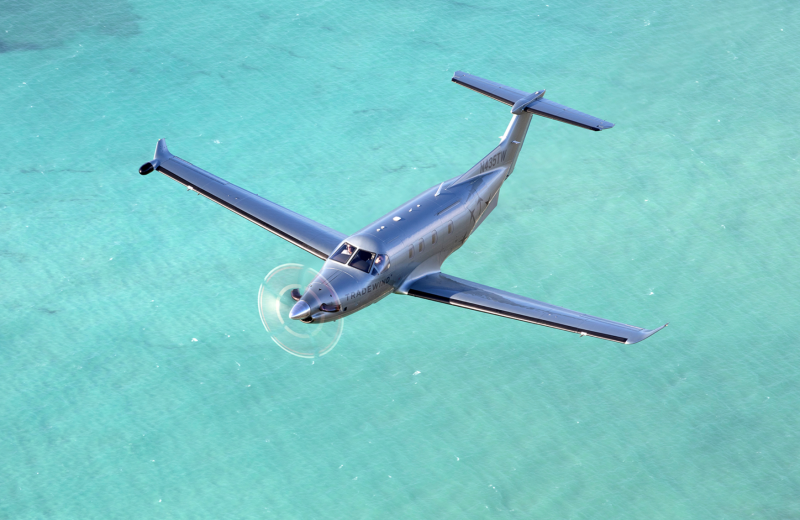
Tradewind is now the second largest air carrier in St Barths by passenger count.
When the Portuguese were first making use of the trade winds in the Atlantic Ocean, known then as Volta do Mar which roughly translates as “turn of the sea”, voyagers quickly realised they needed to respect the details to optimise their use of the prevailing gusts.
To reach South Africa, for example, Portuguese sailors needed to set course for Brazil. Once far out in the ocean, at about 30°S, ships headed east again. They discovered that simply following the west African coast means sailing upwind in the Southern hemisphere.
Similarly, when returning from west Africa to Europe, ships needed to navigate to the west or north west (depending on the wind). They could then adjust course to the north east to an area near the Azores islands before heading back to the European continent.
They might be a lot smaller, but just shy of four centuries later, Eric and David Zipkin identified some trade routes of their own. The brothers were not the discoverers like the Portuguese in the Atlantic Ocean; however, profiting from the routes required the same precise calculation and attention to detail.
After spending so much time around airports on a hobby basis out of college, Eric realised he should probably get paid for it. He took a job with an on-demand charter company in the New York area and discovered an affinity for the business, quickly realising there was a “strong need” for a “much higher level of service” in the regional aircraft space.
“Going back about 30 years, there’s always been a high level of quality in the corporate jet space, and the large players like NetJets and FlexJet have really raised the bar,” Zipkin tells us. “But what I found back in the late ‘90s and early 2000s was that the bar wasn’t being raised in the regional space.”
On those 150- to 300-mile routes, Zipkin says people were getting into some “pretty dodgy aeroplanes” managed by some equally colourful operators. “I also realised that one of the most critical things in this business, because it’s ultimately a very small market, is your ability to actually deliver the service you advertise,” he says.
“To be successful in this business, you really have to sweat the details. You need to provide the level of service and quality that your clients are paying for.”
The Zipkin brothers launched Tradewind Aviation with a single Cessna Caravan in the weeks following September 11th, 2001. If preparations to launch the company had not concluded when they did, Tradewind might look a lot different today, says Zipkin.
“Prior to 9/11, I thought I’d start out like many of our competing operators with a piston twin and just be a better mousetrap. But in the post-9/11 environment, you couldn’t get insurance on many types of aeroplanes,” he recalls.
Zipkin could get insured on a Caravan because he had hours flying for a freight operator. In a second stroke of fortune, a bank had just repossessed one and had no exit plan. “I was able to make a very aggressive deal to purchase it,” he says. “That made all the difference because the single-engine turboprop really has the operational margin that allows you to support the underlying level of service and quality.”
‘Wrong assessment’
Tradewind acquired its first PC-12 in 2003. This would set the tone. Today the operator has a fleet of 38 PC-12s, a mix of managed and owned aircraft. That first aircraft was a managed tail. Zipkin did not think the PC-12 would be successful on the charter market, but being paid to manage it meant he was willing to give it a go.
“That was probably one of the most wrong assessments I ever made in my career, because the aeroplane was so popular. Customers loved it. The economics were so much better, the reliability was so much better. That one PC-12 turned into two, three, four. We grew organically,” says Zipkin.
The company sunsetted its Caravan fleet in 2013, sold on its TBMs a few years later, and by 2021 stopped operating jet aircraft altogether, opting to focus solely on the PC-12. Today Tradewind employs about 400 staff, including 150 pilots. The company largely serves the same trade routes Zipkin identified back in the late ‘90s, as well as a few additions. It sells both ad hoc charter and premium scheduled services on fixed routes.
“The Boston to Washington corridor – that’s a very busy summertime business, largely around holiday makers going to Nantucket and Martha’s Vineyard. About three years ago, we opened up in the Palm Beach area, flying largely to the Bahamas and intra-Florida. We’ve also got a large base in San Juan, Puerto Rico for our Caribbean business, flying to the islands of the Eastern Caribbean, most famously St Barths.”
The jets or turboprops equation
Tradewind is now the second largest air carrier in St Barths by passenger count. Zipkin indirectly relates the operator’s sustained success in the regional turboprop market to the decision to not pursue other aircraft types.
“The challenge on the jet side, as an owner-operator, is that the operating margins are really not sufficient to support a high-service, high-touch infrastructure,” he says.
“The reason for that is that the vast majority of corporate jets in the US are operated under an aircraft management scenario. You’re competing against what economists would call an irrational actor – somebody who owns an aeroplane and is going to own it whether they charter it out or not.”
When these owners choose to put it on the charter market, they’re willing to accept a rate that’s only a small amount above their direct operating cost, which isn’t enough to cover the capital costs. “So if you’re an owner-operator – meaning you own the aeroplane purely for generating revenue – you can’t compete, because you’ve got capital costs to cover,” says Zipkin.
This leaves the management sector as the only option, which is a crowded market. “There are very high barriers to entry. We’re not going to go head-to-head with Solairus, EJM, Clay Lacy, or any of those large aircraft management companies – they’ve got massive infrastructure and deep pockets,” he says.
“But similarly, they don’t want to deal with turboprops. Turboprops are a lot of work. We average three live trips a day per airframe. Your typical jet operator, if they’re doing one live leg per day, they’re a busy jet operator.”
Across Tradewind’s 38 aircraft, the operator racks up 40,000 flight legs per year.
“Jet operators just don’t want to get involved. They don’t have the expertise, they don’t have the wherewithal, and frankly they don’t need to. When you’ve got lucrative management deals and a massive book of business, why bother with turboprops? That’s great for us, because whenever they have trips for turboprop, we’re their first call,” says Zipkin.
‘Constant renewal’
Tradewind has a 20-aircraft order with Pilatus for the PC-12 NGX, of which it has taken delivery of 10 so far. Zipkin “fully expects” Tradewind to continue taking new NGXs well beyond the initial deal.
The operator retires aircraft when they hit the 20,000 hour life limit – about 14 or 15 years. The newest aircraft go to private charter and fly up to 8,000 hours, before transitioning into the scheduled business.
“It’s really a constant renewal of the fleet,” says Zipkin. “It’s kind of a two-to-one approach: one new aircraft retires an old one, and one new aircraft grows the fleet. Over time that may continue, we may grow a bit more quickly or not – it depends a little on where the market goes.”
Watching where the market goes is somewhat of a pastime for Zipkin. He has been keeping an eye on electrification, and not solely because his son works for electric aircraft and infrastructure developer Beta Technologies.
“The vertical take-off and landing space, I think, is still very far off. And frankly, helicopter operators are probably best suited to move into that space. But conventional take-off and landing electric aircraft are very much on our radar.”
Zipkin believes electric aircraft could certainly be a fit for parts of Tradewind’s route network. “And we’re probably leaning more into those markets than we otherwise might because electrification is on the horizon. You can argue about whether it’s a three-year horizon or a five-year horizon, but they are on it,” he says.
Until the advent of steam power, trade winds formed the corridors of commerce for the Portuguese and all those who sailed after. The same could be true of Tradewind Aviation and the entry into service of electric aircraft, but until then turboprops and “sweating the details” is more than sufficient. Just search ‘St Barths airport’ on Google images.
Subscribe to our free newsletter
For more opinions from Aicraft Investor, subscribe to our One Minute Week newsletter.