


‘It’s not a Toyota’ – Grappling with rising MRO costs
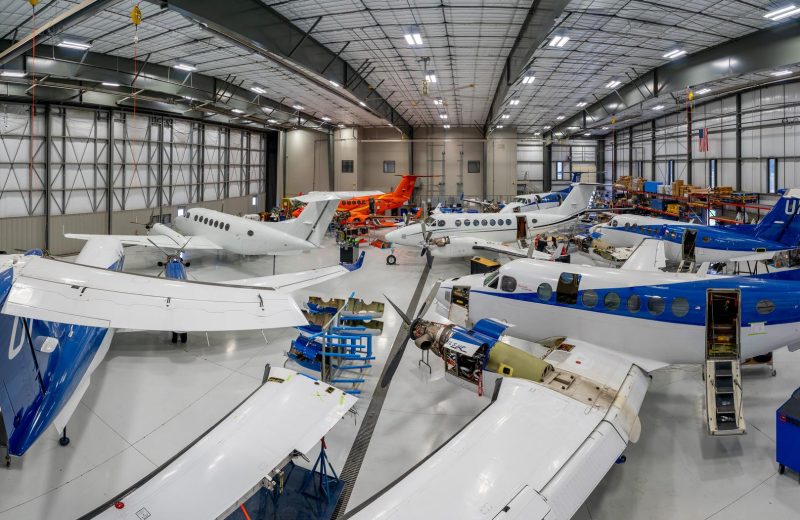
“It’s not about the upfront costs, it’s about the long-term sustainment costs and the parts availability,” says Gregg Fahrenbruch, CEO of Yingling Aviation.
If aircraft maintenance was a game show, it should be called The Price Isn’t Right. An engine overhaul that cost $350,000 in 2019, today could set owners back $750,000 or more.
Price rises are almost across the board, forcing owners, operators and the maintenance providers serving them to think hard about MRO costs. This is particularly acute for new or first-time owners who bought aircraft post-pandemic and effectively came in blind to the potential of surging maintenance costs.
“That’s the challenge with a lot of the buyers coming into the market right now,” Gregg Fahrenbruch, CEO of Yingling Aviation, tells us. “They’re looking at published costs per hour and things like that. When they get into these big maintenance events, they get a bit shell-shocked by the increased costs and the uncertainties from some of the vendors.”
He says the industry has seen “uplifts” from major engine OEMs on engine overhauls and associated costs. This is having a knock-on effect on new entrants’ confidence in their maintenance vendor.
“The unavailability of parts has been a real challenge,” says Fahrenbruch. “It is hard to give customers that confidence when they first buy an aircraft, because they think it’s going to be like buying a Toyota – that it’s going to be easy to maintain these assets.”
‘Education is everything’
Traditionally aircraft brokers have been the first line of defence to educate buyers on the potential issues surrounding an aircraft’s maintenance. This is an important role brokers need to play, particularly in the case of first-time owners, says Fahrenbruch.
“The long-time owners have felt the pain – when there’s a six-month lead time on a part, they can look at it and think: ‘I’m going to stick with a tried-and-true aircraft that has good parts availability, a good supply base.’ A new owner might say: ‘Oh, wow, I can buy this aeroplane for $500,000,’ but they don’t realise there’s no parts infrastructure to go with it.
“It’s not about the upfront costs, it’s about the long-term sustainment costs and the parts availability.”
Brody McKenna, director of MRO operations at Western Aircraft, tells us: “We encourage owners and their flight departments to start the conversation early and provide either a list of upcoming maintenance requirements or access to the aircraft’s maintenance-tracking system. This allows the MRO to develop a more complete picture of the anticipated work scope, estimated cost and scheduling requirements before the aircraft arrives.”
A common misconception Western Aircraft sees from inexperienced owners is that an aircraft’s scheduled redelivery date is completely predictable.
“An MRO can carefully plan the known work scope, but discrepancies, parts availability and other issues outside the customer’s or facility’s control can affect the final schedule,” says McKenna. “We sometimes see critical flights planned immediately following the anticipated redelivery date. That creates unnecessary operational risk.”
Vendor and parts shortage to blame
Fahrenbruch describes today’s engine overhaul market as volatile. He says overall capacity shrank “dramatically” during the pandemic and has never fully returned.
“With all the OEMs right now, we are seeing some upward price momentum across so many product lines – some even doubling or more,” he says. “I think you’ve got the OEMs that are opportunistic when they can be, but most of it is just the lack of suppliers and vendors who can keep pace with the amount of work.”
Fahrenbruch believes certain legacy aircraft are being left almost entirely without care because vendors are focusing on new models. “Without as much throughput, the parts costs individually go up because it’s not a volume buy anymore,” he says. “I’ve seen aircraft owners send an engine in expecting a $350,000 overhaul, and it comes out at $750,000. Every turboprop owner needs to realise that you almost need to plan to double your budget just for contingency.”
The impact is significant, and can be likened to fuel price spikes, says Eric Zipkin, CEO and co-founder of Tradewind Aviation. “Fortunately, at the top of the market, we have the pricing power to adjust as needed to cover those costs. That said, when cost increases reach a certain level across an industry, it opens the door for new competitors,” he tells us.
Parts suppliers and manufacturers should take note, continues Zipkin. Operating some of these aircraft has become so expensive that operators are forced to explore alternatives – whether that means different engine types or switching suppliers for various components. “In effect, the industry may be hurting itself,” he says.
Getting creative
Big fleet operators are looking at creative solutions. Some are buying aircraft to part them out and repurpose the engines to help support costs, while many charter operators are simply passing the costs through to the customer, says Fahrenbruch.
“You’re going to see owners question whether they should just charter instead of own,” he explains. “Obviously, some owners who operate these aircraft are doing well, so they can potentially absorb the cost. But then you have some that built their model and budget around a certain cost basis, and now it’s getting so expensive that they have to question it.”
Yingling is a Cessna Conquest repair facility. There are just a few hundred of the type left in the global fleet. Fahrenbruch says it is getting so hard to find parts, owners are pooling resources to try to establish their own revised parts manufacturing process.
“I’ve never seen anything like that before,” he says. “I think some of these aircraft are getting to the point where they’re no longer serviceable – the folks that own the intellectual property don’t want to commit the resources to put these parts back into production. So the owners are trying to figure out how to do a PMA [Parts Manufacturer Approval] and get their own certification or work with a vendor to put these back into production.”
Operators are also looking to rent engines whilst delays on engine overhauls continue. Ricardo Real, CEO of Chilean operator Aerocardal, tells us its PC-12 engine used to take a month and a half to be overhauled.
“This year we sent it to the US in June, and the delivery time is December. So we negotiated with the programme provider and got a rented engine with no additional cost. We’re going to fit it and keep the aircraft moving,” he said. “It is a huge issue. We have to be wise in advance and negotiate with providers.”
Tradewind Aviation has been stockpiling parts to get ahead of the problem. “One of the smartest moves my vice president of maintenance made early in the pandemic was stockpiling parts. Buying them wherever possible. Since then, we’ve nearly tripled the dollar value of parts we keep on hand,” says Zipkin.
‘We haven’t raised our prices’
Private operators in Chile are required to complete just one annual check for maintenance. Real says: “In our case – I don’t know if we are too good or too dumb – we haven’t raised our prices. For example, our annual inspection is around $17,000. If you compare with the US, it’s around that figure anyway, but we keep our man-hour rate at $85 an hour, whereas in the US it’s around $120.”
Aerocardal’s three-year price freeze means margins have been squeezed, but Real says this keeps “clients loyal” and has prompted an increase in the customer base. “In the last six months, we’ve gained five or six more customers bringing their aircraft for maintenance. We also regained a contract with the Chilean Air Force,” he says.
The company also passes on discounts to customers where it can. “When we sell an aircraft we try to give customers a complete solution. On the insurance side, for example, I spoke to a customer yesterday. We have a good relationship with our insurance provider so we got about a 12% discount on the whole package, and we passed that on to him.”
Real encourages owners to subscribe to aftercare packages offered by OEMs. For example, Pilatus offers CrystalCare, a comprehensive warranty and service programme. “The customer pays for that service, so they get everything covered – it’s not a logistics issue because everything is paid for, and we just ask for the part and it comes,” he says. “Pilatus works very well for us, they have spare parts in Brazil and Miami.”
Be more proactive
The best thing an owner can do is to think further ahead than ever before. Fahrenbruch says the maintenance methodology is changing: “you need to engage your maintenance partners and your vendors way earlier – 12 months out.”
“When an owner comes to us and says: ‘Hey, we’ve got a large inspection coming’, we’re starting to think through not only the inspections but what parts are timing out for their overhaul cycle, and how do we get into a queue six months early.”
It is possible to come in for a three-week inspection today, but have to wait four months for a part to come back from overhaul. This means the maintenance provider needs to also act as an adviser.
“We’re advising as the director of maintenance for some owners who maybe don’t have a full-time mechanic. We’re sourcing different shops, helping them build their strategy over maybe the next five years on what’s going to be coming when, and how we can support with acquiring parts and being proactive,” he says.
It is the same at Aerocardal. The company is even offering discounts to customers who book their annual checks and overhauls in early. “We have so much demand that we made special discounts to our customers if they, for example, move two or three weeks in advance of the day they want it,” says Real.
Western Aircraft’s McKenna says the greatest opportunities to control maintenance costs and disruption often occur before the aircraft enters the facility. “Early planning, a clearly defined work scope and open communication allow the customer and MRO to identify potential issues, evaluate options and make decisions with a better understanding of the operational and financial implications,” he explains.
‘It won’t last forever’
Luckily, Real has seen enough cycles in aviation to predict that maintenance cost rises will not last forever, and the price may just be right again.
“We saw this back in 2020 with the pandemic,” he says. “We recovered a bit until 2023, and now I think because of worldwide events it’s kind of repeating the loop. But this time it’s not as deep as 2020 – things are going back again.”
There are also new tools available to stay ahead of the curve. “You have to talk to providers. We quote worldwide providers online. For one part number, we get a list of maybe 12 providers worldwide, we negotiate and we have more options to work with. Also, we start seeking tooling and spare parts four to five months in advance, so when the aircraft arrives we already have the package,” said Real.
“Last year our fleet availability was about 65%. This year it’s 87%, because we improved some tasks and started planning further in advance. That gave us a better understanding of our maintenance programme, and it’s been working so far.”
Subscribe to our free newsletter
For more opinions from Aicraft Investor, subscribe to our One Minute Week newsletter.