


POPA hails ‘needed layer’ of UPRT training
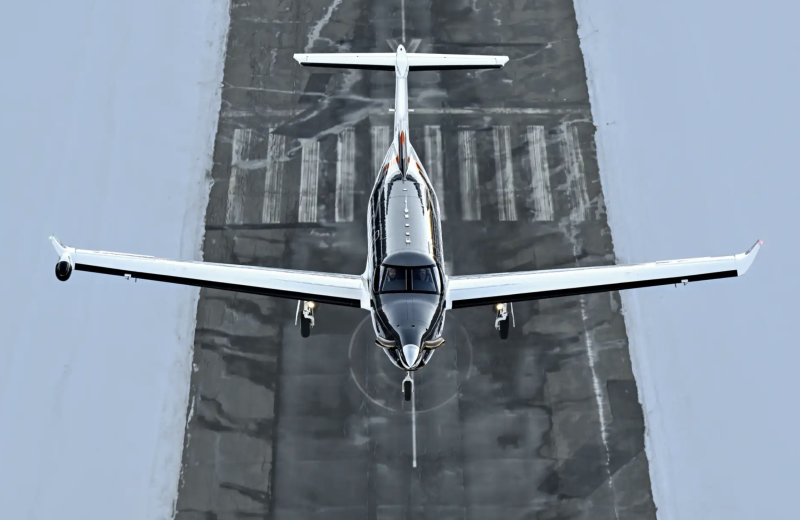
The programme combines academics, all-attitude on-aircraft training, advanced simulation, jet UPRT and type-specific virtual reality to develop transferable upset prevention and recovery skills, said APS.
Unfortunately, there is a long list of aircraft accidents that might have been preventable had the pilots in control realised the issue and addressed it in time. Loss of control in-flight is the most prolific cause of aviation fatalities.
That is why Upset Prevention and Recovery Training (UPRT) is a vital tool in the arsenal of any pilot; arguably none more so than Pilatus PC-12 and PC-24 pilots who find themselves at the sticks of aircraft renowned for their short and rough field capabilities.
UPRT is a mix of theoretical and practical training provided to pilots to enable them to recover from unusual aircraft attitudes and unexpected situations.
Earlier this month, UPRT specialist Aviation Performance Solutions (APS) launched its new Pilatus Family UPRT Program, providing Pilatus pilots with advanced upset training tailored to the aircraft they fly and the environments in which they operate.
Captain Clarke McNeace, executive vice president, APS tells Aircraft Investor: “The fundamental upset prevention and recovery competencies are transferable across aircraft, but the risks and operational environments are different.”
For the PC-12, APS emphasises scenarios relevant to high-performance turboprop and frequent single-pilot operations, including workload, energy management, approach and go-around environments, and recognition of deteriorating aircraft states.
“Our objective is to take proven UPRT competencies and apply them in scenarios that look and feel like the pilot’s actual operating environment,” adds McNeace.
Laura Mason, executive director, Pilatus Owners and Pilots Association (POPA) tells Aircraft Investor the association sees UPRT as a vital added layer on pilot training. “Our members are very concerned about safety,” she says. “UPRT training is viewed as an additional and needed layer of training that our members participate in.”
The new programme builds on more than a decade of APS supporting the Pilatus pilot community. It is aimed at individual pilots, owner-pilots and flight departments.
“We first became familiar with APS when I had BJ Ransbury speak at one of our conventions; he has quite an impressive resume. From there, over the years, our relationship grew until we established a partnership with them as a POPA benefit, making us a UPRT Partner for over five years now,” says Mason.
Paul ‘BJ’ Ransbury, CEO of APS said in a press release: “Pilatus aircraft give pilots tremendous capability and operational flexibility, requiring training that reflects the way these aircraft are actually flown. Our Pilatus programme prepares pilots for the unexpected, building the skills and resilience to prevent an airplane upset from becoming a catastrophic loss of control.”
The new APS programme is an effort to bring that operational context into a comprehensive training solution designed to prepare pilots to “recognise, prevent and recover” from unexpected airplane upsets before they escalate into Loss of Control In-flight (LOC-I), the number one cause of aviation fatalities.
The programme combines academics, all-attitude on-aircraft training, advanced simulation, jet UPRT and type-specific virtual reality to develop transferable upset prevention and recovery skills, said APS.
McNeace says: “Our long relationship with POPA and Pilatus pilots has reinforced that loss of control is rarely just a stick-and-rudder problem… Startle, surprise, workload, automation and inappropriate instinctive reactions can become significant factors when an aircraft departs the normal operating envelope. The PC-12 and PC-24 also operate across remarkably diverse missions and environments, so we wanted the training to reflect those real-world exposures.”
Mason stresses the importance of UPRT for single pilots. “I believe UPRT is even more important when flying as a single pilot. POPA pursues programmes that continuously support the safe operation of Pilatus aircraft by the membership,” she says.
Under EASA regulations, an advanced UPRT certification is required before pilots can begin a multi-crew type rating. It is also a prerequisite for a type rating on single-pilot high-performance complex aircraft and single-pilot aircraft flown in multi-pilot operation – a King Air or a Piaggio P.180 Avanti, for example. But aircraft under 5,700kg with one engine, like the PC-12, are not considered ‘complex’, so advanced UPRT is not included in the type rating.
It is a similar story in the US. The FAA approach is linked to airline operations. Since 2019, all Part 121 carriers need to conduct UPRT, but Part 91 and Part 135 charter operations generally do not have an equivalent mandate, although insurers and operators often require it.
Mason would like to see UPRT become a standard. “We have, and will continue to encourage members to take part in UPRT,” she says. “It would be fantastic to see UPRT become a standard in training, both initially and recurrent. The more training, the safer the pilot!”
McNeace concludes: “Our programmes are built around the internationally accepted UPRT framework and guidance developed by ICAO, the FAA and other leading aviation authorities, with the objective of meeting or exceeding applicable UPRT training standards. We also distinguish between regulatory compliance and genuine competency—checking a UPRT box is not the same thing as preparing a pilot to recognise, prevent and recover from an unexpected aircraft upset.
“Ultimately, the measure that matters to us is whether the pilot leaves with durable competencies that can transfer to the airplane they fly every day.”