


Piaggio P180 Avanti: Buyer’s and Investor’s Guide
Pros:
A stylish and cost-efficient aircraft with plenty of cabin space and the speed to match it’s efficiency.
Cons:
Difficult accessibility to parts and a limited support network depending on location.
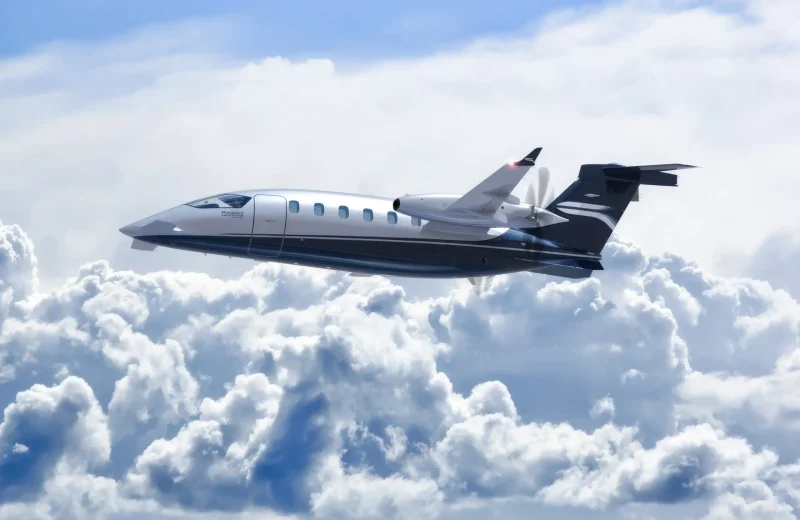
The P180 Avanti stands out compared with the rest of the aircraft in its class, given the nickname by some ‘The Ferrari of Turboprops’. This is the first model of the iconic Piaggio line, with the first delivery in 1990. This aircraft provides its owner with the experience of having the comfort of a jet combined with the efficiency of a turboprop.
Flying:
This first edition of the Avanti model encompasses the Italian style, but also the aggressiveness of Italian machinery. With a cruising speed of 390kts it places it far ahead of direct competitors like King Air 350, which cruises at 312kts. It is almost a whole new subsection of turboprop — hence the Ferrari nickname.
However, where the Avanti shows its age is in its range. It can fly approximately 1,500nm in its standard configuration, whereas the King Air 350 can go around 1,800nm, which can be an important factor for those flying longer distances. However, for typical short or medium trips this difference in range will rarely become a factor. Also the added benefits of speed and comfort over most other turboprops/pistons remain a prominent consideration.
Additionally, the aircraft has the capability to fly to FL410, allowing it to avoid bad weather. This is something most turboprops can’t do.
Owning:
The Avanti P180 has an unconventional look. Its three-surface canard design with rear mounted propellers are a big reason why. The early models were built in Kansas and finished in Italy, today they are built solely in Italy. The Avanti’s PT6A-66 engines have proved to be reliable workhorses. However, other parts of the aircraft tell a different story. The brake assemblies are a persistent issue; due to being expensive and slow to source.
The Avanti P180 also does not come equipped with anti-skid brakes, resulting in long ground rolls being reported. Digital steering which is common on standard modern turboprops are not accessible on this model and have only been added into later models of the Avanti line.
On the positive side, the ownership community is both very passionate and knowledgeable. The owner network has kept many aircraft in great condition, and the recertification process has returned several aircraft to full airworthiness. The original price of the Avanti was around £2.8m / $3.75m, and today a well maintained one can be found for around £1.1m / $1.5m, making it an accessible route for someone who wants near-jet performance in the used turboprop market.
Travelling:
The secret weapon of the Avanti P180 is it cabin. It looks sleek and narrow from the outside, but its unique fuselage allows for a spacious cabin. At 5ft 9inches tall and 6ft wide, it rivals the latest models such as the EVO. For an aircraft that first delivered in 1990, this exceeds the King Air 200 of the same era, and rivals aircraft that cost considerably more.
The Avanti P180 can seat between 7-9 passengers depending on the configuration. The cabin of the original Avanti set a template that Piaggio have never really changed. Owners tend to upgrade the interior over the years, making it possible to find improved interiors on the market compared to the original spec.
The cabin pressure sits around 6,600ft at maximum altitude, this is identical to later variants. Over a flight lasting a few hours, passengers would arrive feeling noticeably fresher than in a King Air, where cabin altitude can reach 8,000ft.
The baggage hold lets the Avanti down. It has a useful load of around 1,700kg in standard configuration, whereas the King Air 350’s is 2,300kg.
Hard facts: Piaggio P180 Avanti
- Range: 1,496mi/2,407km/1,300nm
- Maximum Speed: 449mph/722km/390KTAS
- Service Ceiling: 41,000ft
- Typical passengers: 6 pax
- Typical Crew: 1-2
- Typical Price: Well-maintained available for under £1.1 / $1.47 million