


Dornier 228: Buyer’s and Investor’s Guide
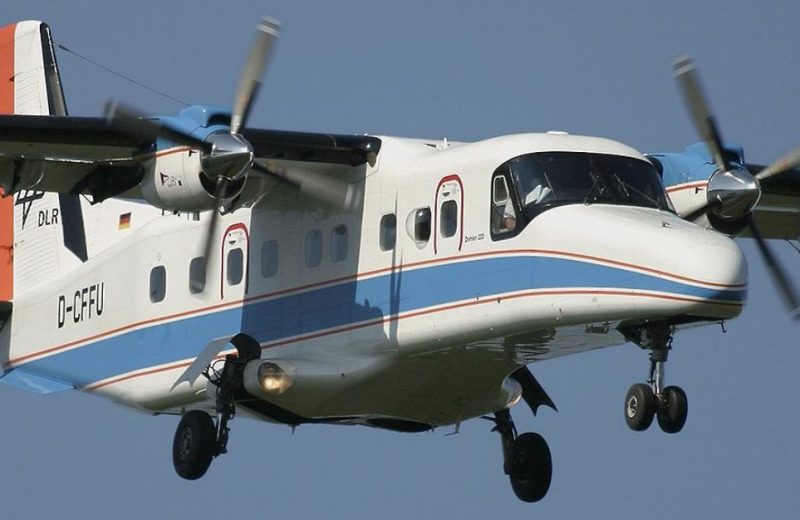
Pros: The 228’s twin-engine setup, STOL capability and supercritical wing make it a versatile and operationally proven utility aircraft, flying in some of the world’s most demanding environments.
Cons: It has an unpressurised cabin. Also having attained certification in the 1980’s it can lack passenger comfort and efficiency versus modern utility aircraft. This means it is better suited for short flights.
Flying:
The 228 cruises at 234 KTAS with a maximum range of 560nm at full passenger load, which can extend to 1,320nm with a lighter payload. It has a service ceiling of 28,000ft which allows it to clear most weather systems, although due to the unpressurised cabin passengers will feel this altitude.
The NG variant introduced more powerful Honeywell TPE331-10 engines, a new five-blade composite propeller and a modern glass cockpit.
Its STOL (Short Take-Off and Landing) capabilities are impressive — it requires just 792m (2,598ft) to take off and 451m (1,480ft) to land. This means the aircraft can access to smaller airports and unprepared airstrips.
Owning:
Pre-owned 228’s sell for around $1.88m (£1.42m), making it one of the more accessible utility turboprops on the market. The new NG production aircraft will cost significantly more than this, due to the updated engines, avionics and propellers — coming in at about $7.5m (£5.7m).
The Honeywell TPE331 engines have an inspection interval of around 2000 hours and benefit from one of the most extensive support networks in regional aviation.
The dual-source production through both General Atomics in Germany and HAL in India also means the supply chain is resilient compared with single-manufacturing line rivals. General Atomics is also exploring hydrogen fuel cell powertrains for this type.
The 228’s ownership appeal lies largely in its versatility and proven track record rather than modern luxury features. It has a conventional alloy fuselage which is simple to maintain and repair even in remote locations. This is a critical feature for operators based in remote areas.
The cabin can be converted from passenger to cargo configuration in around one hour by a single person, it also works regularly as a medevac platform, maritime patrol aircraft, parachute operations aircraft and VIP transport. For operators this means that a single aircraft can generate revenue from a variety of missions depending on the season, contract, or day.
Travelling:
The 228’s cabin measures 20.7ft long, 4.4ft wide and 5.1ft high, giving it a notably taller interior than most of its competitors. With its rectangular fuselage, in the standard 19-seat configuration, the 228 provides more space and headroom versus an oval-shaped fuselage. Air conditioning comes as standard, and large windows create a bright cabin atmosphere.
Where it falls short is its lack of cabin pressurisation. This means that passengers feel the altitude difference more severely compared to pressurised rivals like the 300-G. For short regional hops this isn’t really an issue, but on longer higher altitude flights this becomes more apparent.
Hard Facts: Dornier 228
- Range: 644mi/1,037km/560nm
- Maximum speed: 269mph/433kmph/234KTAS
- Service ceiling: 28,000ft
- Typical passengers: 19 Pax
- Typical crew: 2 Pilots
- Typical price 228-212 (pre-owned): $1.88m (£1.42m)
- NXT version price (new): $7.56m (£5.7m)