


Operators can’t see the good for the fees
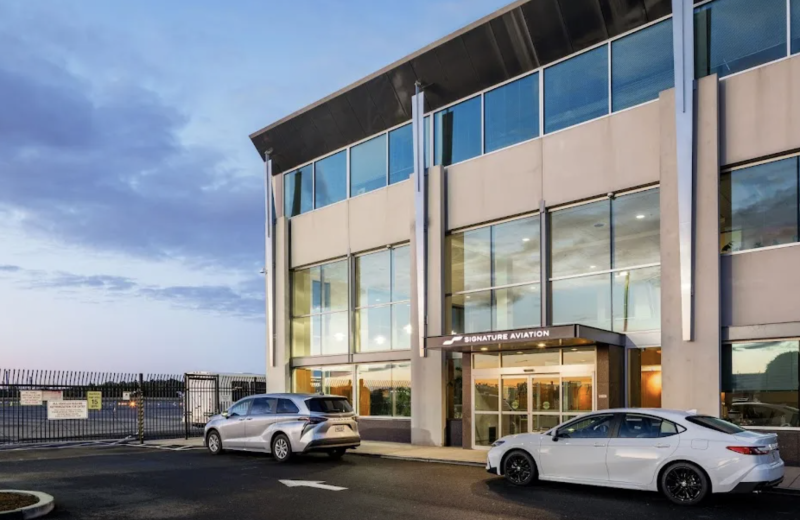
Signature Aviation says less than 1% of its transactions over the past 12 months have incurred an event fee.
Big deals generate attention, but the operating companies do not always love the extra scrutiny.
KKR recently sold a stake of Atlantic Aviation to Apollo Global Management in a deal valuing the company at about $10bn. This followed on from KKR’s acquisition of Atlantic Aviation in 2021 and Blackstone, Global Infrastructure Partners and Bill Gates’ investment vehicle buying Signature Aviation for $4.7bn in May 2021.
But not everyone is celebrating. “Despite what Gordon Gekko said, greed is not good,” says Kenn Ricci, principal, Directional Aviation and chairman of Flexjet. He tells CJI he believes consolidated FBO chains, backed by private equity, are “challenging the wealthy to see just how wealthy they are.”
Eric Zipkin, CEO of turboprop operator Tradewind Aviation, says that airport access is the greatest threat to his business. “The FBOs are being bought up, generally by a small group of private equity-backed organisations,” he tells CJI. “Because of their size and the fact they’re acquiring most of the FBOs in particular markets, it gives them near-monopoly power on pricing. The other thing is, because they’re really financially motivated rather than business-building motivated, they’re focused on maximising short-term financial returns.”
Zipkin says FBO chains have increased fees by “ridiculous amounts in many cases”. “Special event fees for almost every weekend in some markets, plus baseline fees, security fees. It’s driven by that monopoly power – they control access to the airport, and you need that airport to serve your customer,” he says.
Ricci says what was “mildly annoying” for his businesses one year ago, is “offensively egregious” today. “We could do a comedy show on inventing an event fee,” he quips. “It is Lunar Eclipse Day, let’s have an event fee.”
Special event fees are not new and have been charged for more than a decade. Just as hotels charge more during peak periods, FBOs (which have capacity limits) charge more during peak periods like sports matches. While they are a lightning rod for criticism, they are not material to FBOs.
Signature says less than 1% of its transactions over the past 12 months have incurred an event fee. And this is despite the demand created by the 2026 FIFA World Cup.
“Like the guests we serve, Signature is also affected by rising operating costs across the aviation ecosystem, including airport rent, construction, security, fuel, labour, equipment and governmental fees and taxes,” Derek DeCross, chief commercial officer, Signature Aviation tells CJI.
He says Signature’s annual concession and airport rent charges increased by more than $90m (or more than 40%) between 2021 and 2025. “During this same period of time, Signature has invested over $3.6bn in capital across initiatives such as safety, infrastructure and technology,” he says.
Atlantic Aviation says that special event fees account for less than 2% of its turnover. John Redcay, executive vice president, chief commercial and sustainability officer at Atlantic tells CJI: “As a relative sizing comparison, just the increase in fuel costs driven by input commodity prices alone represented a much larger amount than all peak-period surcharges combined during that same period.
“Much as general aviation operators have evolved their own economic models to address peak and trough periods – through forms of dynamic pricing via blackout dates and surcharges – ground infrastructure providers have needed to evolve as well,” says Redcay. “The nuanced but important difference is that ground infrastructure experiences peaks and troughs at individual locations at any given moment, rather than across the entire network at once.”
Ricci is not convinced and is trying to build a coalition of companies to rally under one voice. “If I complain to Signature, I have a voice, I have a pretty big voice, but if we all do this together we will certainly be heard. This is the one thing we should all be vocal about,” he says.
Zipkin thinks industry groups – like NBAA, NATA and AOPA – need to speak with a common voice to advocate for operators. “We need a mechanism for the industry to speak as a whole, but I don’t know how to achieve it. It is not clear which organisation would be that unified voice,” he says.
Dan Hubbard, NBAA spokesperson and acting chief operating officer tells CJI the association supports fair and equal access to airports, just as it supports “fair, reasonable, detailed, transparent fees” that are publicly available to operators.
Hubbard says that NBAA is engaging FBOs to learn more about how they determine special fees are necessary and justified. “Everyone recognises that special events and related pricing often present unique challenges. When those situations arise, it’s important that a meaningful dialogue among stakeholders be undertaken that can inform decision-making between operators and FBOs, and other parties,” he says.
Not all operators are as frustrated. Andrew Schmertz, CEO and co-founder of Hopscotch Air, a Cirrus SR22 operator on the US east coast, tells CJI he believes an operator’s relationship with the FBO is key.
We have excellent relationships with our two landlords, Atlantic Aviation and Modern [Aviation],” says Schmertz. “As such, we haven’t faced significant problems at any airport we regularly operate to or from. We stay on top of special event fees, but for Cirrus aircraft they are usually low.”
Schmertz does ask FBOs to act with equality though. “While it’s tempting to take big-ticket money from corporate business jets, FBOs need to remember to service piston and turboprop airplanes equally,” he says.
Ricci believes operators need to combat FBO chains through lawsuits. He claims antitrust is involved in their expansions. “The fact that the government has allowed this duopoly to exist is not in the public interest. I have protested to every buyout that’s ever happened in the FBO business. I protested because I get called by antitrust. They never listened to me, but there’s still a government solution here that we don’t often make use of in our industry,” he says.
Monopoly regulators typically use the Herfindahl-Hirschman Index to measure concentration risk. Signature and Atlantic together have FBOs at less than 10% of the more than 3,300 US business aviation airports. Even if you just focus on the top 100 airports (based on 2025 traffic) they are just under the Herfindahl-Hirschman Index threshold of 1,800 (if you want more information on our workings please email fayaz@cji.com). There is no way that Signature and Atlantic Aviation could be allowed to merge with each other, but their concentration has not yet become an economic duopoly at the busiest airports.
Ricci was involved in the sale of an FBO business to private equity back in 2007. Directional bought Mercury Air Center’s FBO network from Allied Capital in 2005, and sold the company to Macquarie Infrastructure two years later. He says: “I was actually opposed to the sale at the time but Directional [Aviation] was only an 20% shareholder so it wasn’t all my fault.”
In an industry with few public companies there are a lot of business aviation companies with private equity investors. Plus a lot of owners and charter passengers work in private equity.
Subscribe to our free newsletter
For more opinions from Aicraft Investor, subscribe to our One Minute Week newsletter.