


Piaggio CEO on ‘realistic’ production ramp up
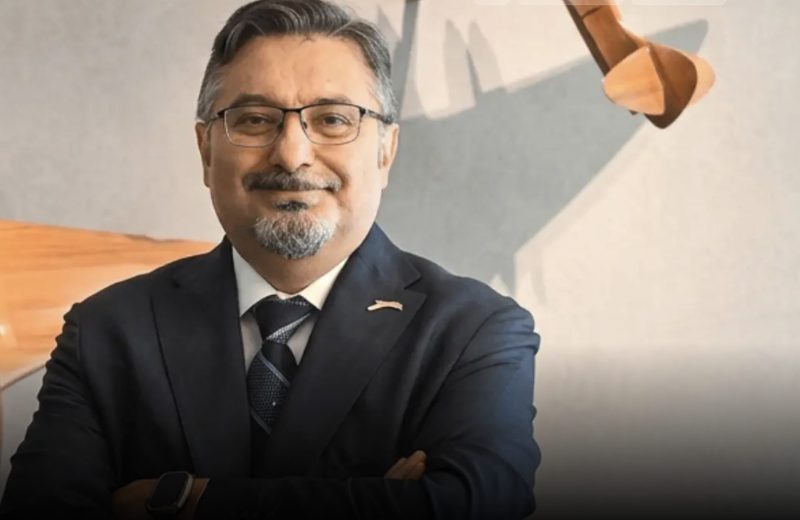
Toninelli, who previously led production of the P.180 at Piaggio’s Genoa site, rejoined the company as CEO in June.
Piaggio Aerospace plans to triple P.180 production, from about six aircraft this year to a steady 15 to 20 per year by 2030, when the new NX variant enters service. Chief executive Francesco Cristian Toninelli said the Baykar-owned manufacturer is investing in a second paint shop to surpass its current limit of 12 aircraft per year. He added that Italian government orders have almost filled the production line until 2028.
Toninelli, who previously led production of the P.180 at Piaggio’s Genoa site, rejoined the company as CEO in June. He said he bought into Baykar’s project for the 140-year-old manufacturer because it “made a clear, very realistic assessment of our position”. The Turkish defence firm acquired Piaggio in June 2025, ending a six-year period of state administration.
“When I arrived, we defined some priorities and pillars for the rebirth of the company. We’re starting this adventure at a complicated time: we have to regain our position, and the whole aerospace industry has changed,” he told Aircraft Investor.
Three pillars for growth
The first pillar centres on the need to re-establish a connection with customers, including a direct line for owners and operators to Haluk Bayraktar, CEO of Baykar Group and an event for US-based P.180 owners.
“We said: ‘We’re here to put the aircraft in its proper position – tell us what we have to do, what makes you satisfied, and what your main headache is right now,’” said Toninelli. “We have to rebuild that relationship strongly.”
It isn’t just about listening. Piaggio has also relaunched its support service network, something it has admitted has been lacking in recent years due to supply chain problems, delays, availability of material and a Piaggio organisation that could not provide proactive support. Baykar has established a spare parts facility in Sarasota, Florida and partnered with two US maintenance providers to set up authorised service centres, with more to come. The centres are focused on the central-west, central-east and south of the US, taking into account where the current fleet is.
It has also launched a web portal which enables owners to access the latest digital aircraft manuals, submit technical queries and get direct feedback from product support engineers. Customers can also request a quotation for a specific spare part. The company plans to let customers order the part directly through the portal. “Of course, we’re not Amazon. But the goal is for customers to buy parts directly through the portal, just like any online purchase,” said Toninelli.
The second pillar is reestablishing the supply chain to support its production ramp-up. “Baykar could have gone to the press announcing: ‘We’re a company with billions in turnover, we’ll relaunch the P.180 and build hundreds of them.’ But that isn’t realistic,” said Toninelli.
Instead they began renegotiating with suppliers, switching vendors or insourcing where capability allows. “We didn’t announce 100 aircraft. We said this year we’ll be able to build a certain number, next year a certain number, and so on. Supply chain delays may mean some adjustments, but we’re staying on a realistic path,” he said.
The final pillar is Piaggio’s third business unit: engines. The company is one of few left with a legacy in both aircraft and engine production, Baykar wants to increase focus on this business line. Piaggio produces parts for Safran, Rolls-Royce and Pratt & Whitney, as well as conducting maintenance on several engines attached to Italian institutional fleets.
“We’re pushing to extend this to new engines and, above all, to increase our volume of parts production,” said Toninelli. “We have quite an impressive facility, with milling machines, turning machines, electron beam welding, hydroforming and more. We can produce a huge quantity of parts, and because we were in special administration, that capacity hasn’t been used to its full potential.”
Piaggio has seven test cells, but is only using four at most at any given time. Toninelli confirmed Piaggio is in talks with major OEMs about setting up their European logistics centres at its facilities. “We can have them on site, collaborate with them and support them with our facilities,” he said. “There’s a lot of meat on the grill, as we say.”
Backlog and production
Piaggio’s backlog includes several contracts with the Italian government for transport and special missions platforms, including airport signal calibration and multi-engine training.
“Our backlog today includes contracts to supply Italian institutions with several aircraft, which almost saturate our production for 2026, 2027 and 2028,” said Toninelli.
He hinted that the order book could grow thanks to Baykar which sells its products in 38 countries. Since Baykar bought the company in June 2025, Piaggio has added eight aircraft to the order book, a “huge jump” from the two or three pear year pre-buyout, he added.
Piaggio’s budget plan goes from six aircraft this year to stable production of 15 to 20 pear year by 2030. Going beyond that would require significant investment to increase internal capacity, said Toninelli.
“Today our internal production can support up to 24 to 26 aircraft with overtime, but generally we can deliver up to that number with our current industrial set-up. Going from half a dozen to those numbers is closely tied to the supply chain’s ability to provide material. We’re managing that closely, with the support of the Baykar,” he said.
Toninelli is confident Piaggio can achieve its 15 to 20 aircraft per year target, but said the bottleneck is the paint shop due to unavoidable lead times for the paint to dry.
“To go above 12 a year, we need a second paint shop where we can paint aircraft in parallel. That’s part of our planned investment,” he said. “If we go from half a dozen today to 20 in three years, we’ll need to exceed 12 a year within two years.” He confirmed Piaggio is scouting companies to set up the second paint shop.
US and Italy first, other markets to follow
There are 213 P.180s in service today. Just under 100 are in the US, this is why the country is the reference market for Piaggio, said Toninelli. He believes the aircraft is a perfect fit for the country because of its size, speed and operating costs, particularly fuel consumption, compared with turbine-powered competition.
“We want our current community of Piaggio owners to be our first advertising vehicle in the US. That’s why we’re working so hard on it. Communication and our interface with the US is our main goal at the moment: to revive enthusiasm for the aircraft,” he said.
Toninelli said Piaggio has taken a similar approach at home in Italy. It has more than doubled its Rome-based technician team that supports Italian government aircraft. It has also launched a spare-parts procurement project for the government fleet and set up a maintenance organisation.
Perhaps unsuprisingly, Turkey is a region of interest. Of the eight aircraft sold since Baykar took over, two will be based in the country and operate across the Middle East.
“Turkey is definitely a target – a market that hasn’t been exploited much, where we believe we can have real success, especially with special-mission variants, specifically medevac configurations,” said Toninelli.
For similar reasons, Africa is also a focus. The content is “almost unexplored and growing with new investment”, Toninelli explained. “Our take-off and landing distances suit it, we’ll soon be able to operate from unpaved runways and the aircraft is ideal for missions like medevac, because sea-level pressure is maintained in the cabin up to 23,000ft,” he said.
Avanti NX update
Piaggio’s P.180 Avanti NX programme is well underway with entry into service slated for 2030. The NX has two confirmed orders, including deposits and two options. “We already have customers who believe in the project and are fascinated by the changes it introduces,” he said.
Some of the work behind the NX will reach the current fleet first. Piaggio is working to approve the aircraft for unpaved runways, which would open up secondary airports in markets such as Africa. Toninelli said the company is “pushing to introduce it on the current EVO before the NX enters service”. Cabin upgrades, including a dedicated satellite datalink for improved connectivity, are already being fitted to the existing fleet. Toninelli said these will be “even more powerful on the NX”.
Not a Dodge, and not quite a Ferrari, Toninelli likens the P180 to a Maserati. A sentiment reflect in the full redesigned NX cabin. The new interior is lighter, featuring an improved layout with new seats and lighting. Equipment and structural changes will make inspections less frequent, which should cut maintenance demands, said Toninelli.
“On the cockpit side, we’re revising the pilot’s accommodation to improve the experience and ergonomics,” he continued. Piaggio is not revealing who will supply the avionics. “I can tell you it will be a leap of two generations,” Toninelli said. The aircraft will keep its autopilot and autothrottle, and potentially add an auto land system as a safety feature.
Piaggio is also changing how it sells aircraft. Backed by Baykar it is planning financing schemes enabling customers to order an NX while still flying, or upgrading, their current aircraft. Toninelli describes these as commercial areas “that were not exploited in the past”.
Toninelli is cognisant of the changes the industry has undergone since Piaggio entered administration back in 2018, but he is relishing the task of reinvigorating the company.
“After Covid there was a revolution in costs and a reorganisation of the major companies,” he said. “It is like moving from the Premier League to the Champions League – the same game, but much more challenging.”